On your body, in this order 0 / 14
Fourteen pieces, from the swimsuit up to the mitts. Links go to men's listings; every one has a women's version on the same page.
For the hole in the ice and the sauna. Wear whatever you feel comfortable in: some go in bikinis, some in swimsuits, some in underwear and some in nothing at all. It is Sweden. The sauna is only about 40 yards away, so you can climb out and run straight there.
Long underwear, same rules as the top. Your legs sit on the ice more than you'd think.
Different thicknesses for different days. Wool or synthetic, snug, no cotton. A dry pair at the end of the day is the best feeling in Lapland.
The layer you move in. Breathable, warm even when damp. Rob's is an old wool sweater with elbow patches; a fleece does the same job. Wool is the one that can stand near the fire.
Insulation for your legs, between the base layer and the shell. Rob wears Smartwool fleece pants; any polyester fleece pant works. Skip the cotton sweatpants.
The big warm thing for standing still: the fire circle, the aurora, the walk back from the sauna. Down or synthetic, with a hood. This is the piece most worth spending on.
Wind and snow stop here. Waterproof, and big enough to go over everything else. Snow that lands on your down melts; the outer jacket keeps it off.
Ski pants or bibs. You'll kneel and crawl in snow to build fires; these keep you dry doing it. Roomy enough over the fleece pants.
Get them at least one size bigger than you normally wear, so you can fit two pairs of socks inside AND still wiggle your toes. This is important: tight boots are cold boots, because squeezed feet lose circulation. Two good roads. A boot with a removable liner you pull out and dry at night, so it isn't frozen solid by morning (Jonas is a Sorel man). Or traditional mukluks, Rob's favorite: lighter and warmer.
A thinner beanie that covers the ears, for working: sawing, carving, snowshoeing. Swap to the warm one when you stop moving.
Nose and cheeks are the first things to get cold injuries. A balaclava covers them, stacks under either hat, and pulls down when you're warm.
The warmest hat you own, over the thin one, for the fire circle and the aurora. Ear flaps are not a joke at -25°C.
Liners for anything that needs fingers: knife, camera, stove, zippers. Never touch metal bare-handed out here. They live inside the mittens the rest of the time.
Mittens beat gloves: your fingers share the heat. Waterproof, insulated, roomy enough over the liners, with a cuff that goes over your jacket sleeve.
2In your bag 0 / 7
Winter days are short and bright, the nights are long, and the air is so dry it steals water from you all day.
Low sun and a world of white. The snow bounces the light straight back up at you. Bring a pair you don't mind sitting on.
Bring both. A wide-mouth bottle freezes last; pull a thick sock over it. A thermos for hot tea, though even its lid can freeze. Water is your best insulator, so drink all day.
Winter nights are long and your hands are busy. Cold eats batteries, so bring spares or a way to charge. A red mode saves your night vision for the aurora.
Yes, in February. Snow reflects most of the sun back at your face. A stick lives in a pocket and doesn't freeze solid.
Insurance for the long aurora watch. A rechargeable one lives in your pocket all week, charges overnight, and there's no pile of used packets.
For the sauna and the plunge. A regular towel never dries out here; a microfiber one does, and it packs to nothing.
For the small hikes we take through the snow: water, the down jacket when you're moving, a spare pair of socks. Any small backpack you already own is perfect.
3Extra considerations 0 / 5
Easy to forget, hard to find in Abisko.
Your train or flight tickets, saved offline. There's no reception at camp.
Anything prescribed, for the whole week plus a couple of days. Tell us about anything we should know.
Lip balm goes at the top of the list. Dry Arctic air and wind chap lips in a day.
Optional. The aurora is worth a real camera if you have one. Cold drains every battery, so keep spares warm in an inside pocket.
Sweden uses the round two-pin European plug (type C/F) at 230V. Phone, camera and laptop chargers almost all handle 100-240V (it's in the small print on the charger), so an adapter is all you need, not a voltage converter. Leave the hair dryer at home unless it says 230V.
What we take care of
Questions?
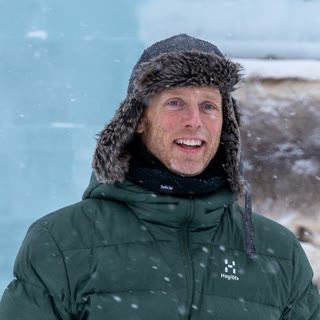
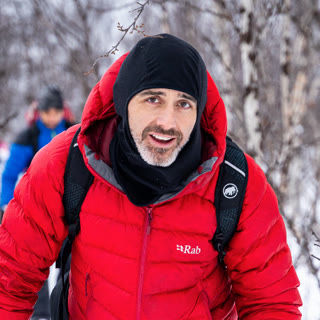
Questions about any of the gear? Feel free to send either of us an email. Jonas is our Swedish guide and knows exactly what works in Lapland in winter, and Rob filmed the gear list and can tell you what he packs. For flights, hotels and the train, see Getting to SnowCamp.